
Contact Center Modernization: The Complete Guide
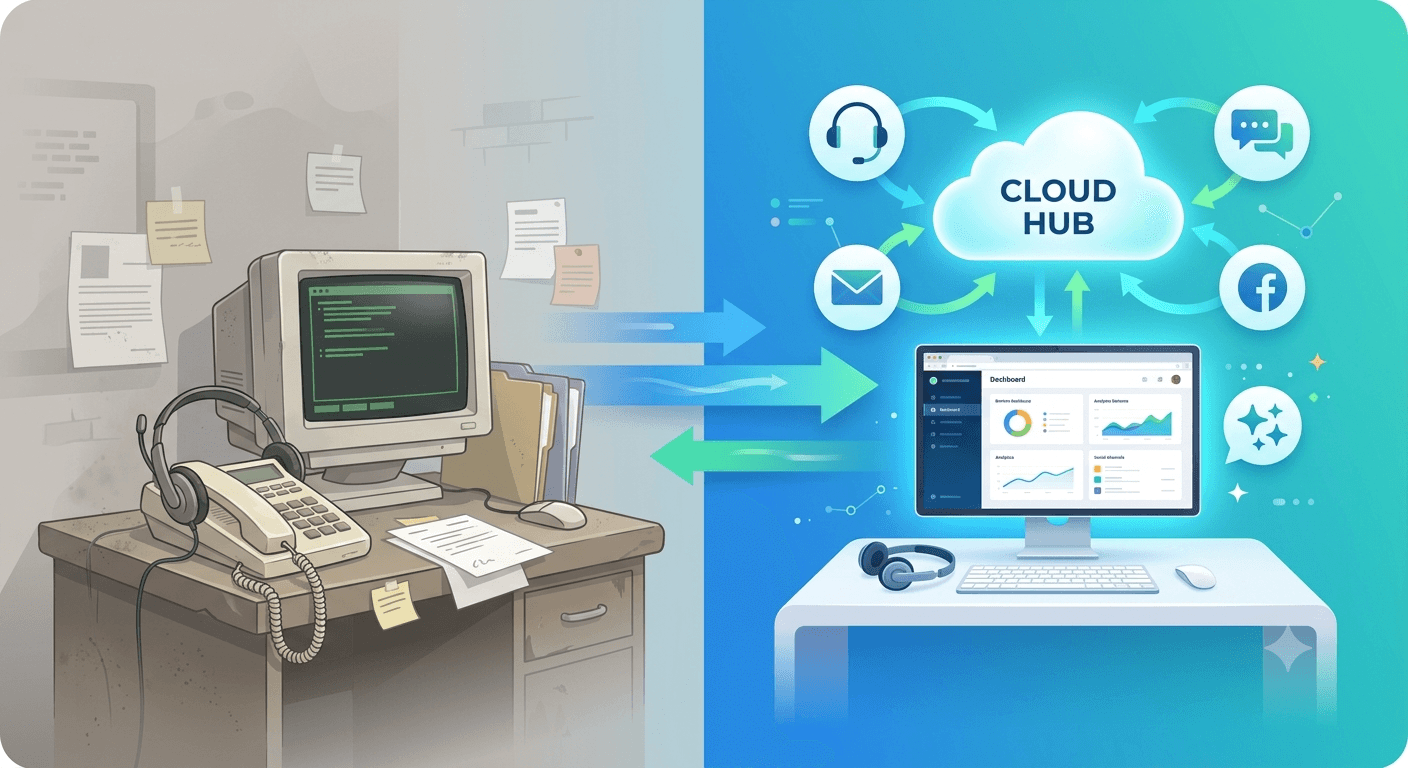
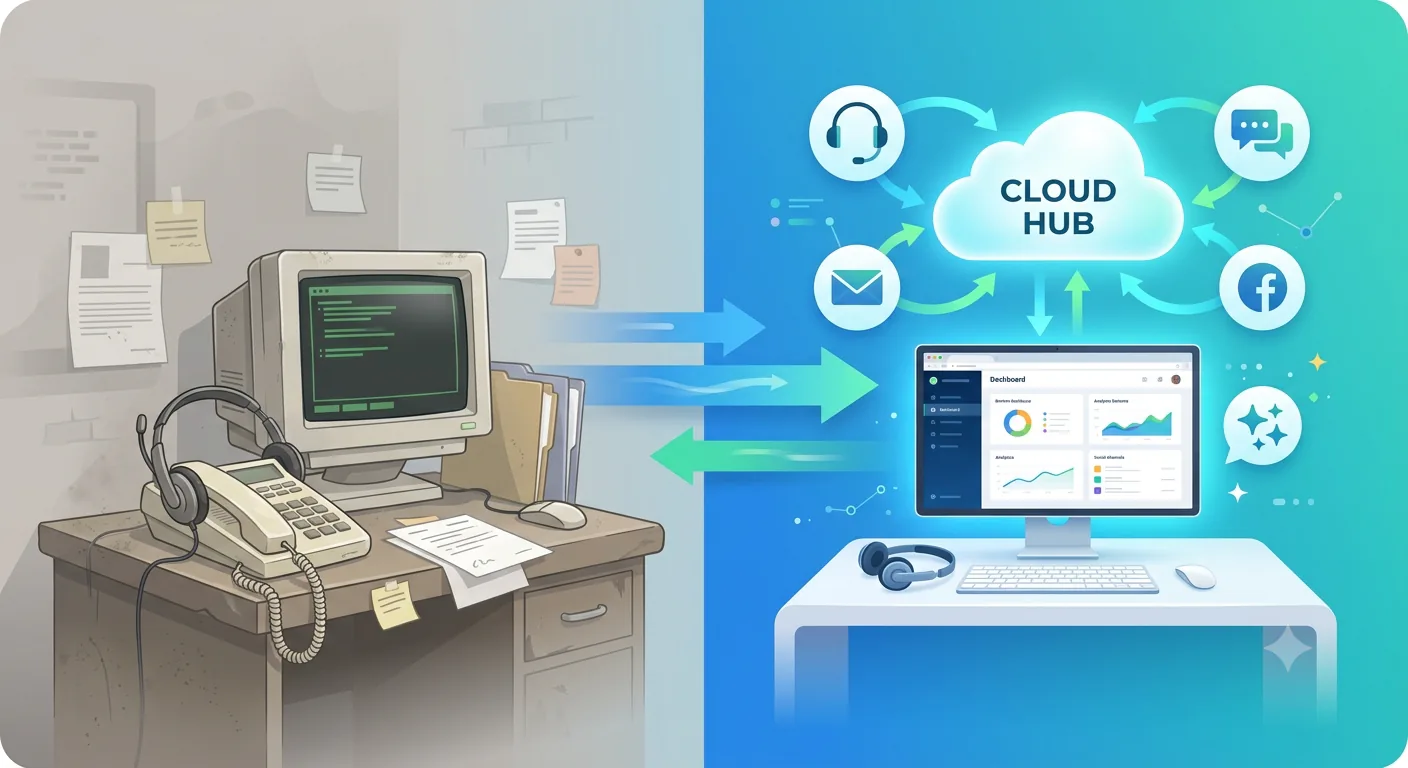
Contact center modernization is the process of transforming a legacy, on-premise call center into a cloud-based, AI-enabled hub that can support customers across voice, chat, email, and social channels, while giving agents and supervisors the tools to work faster and smarter. It's rarely one project. It's usually a series of overlapping initiatives: migrating off aging infrastructure, layering in AI and automation, unifying channels, and rethinking how work gets routed and managed.
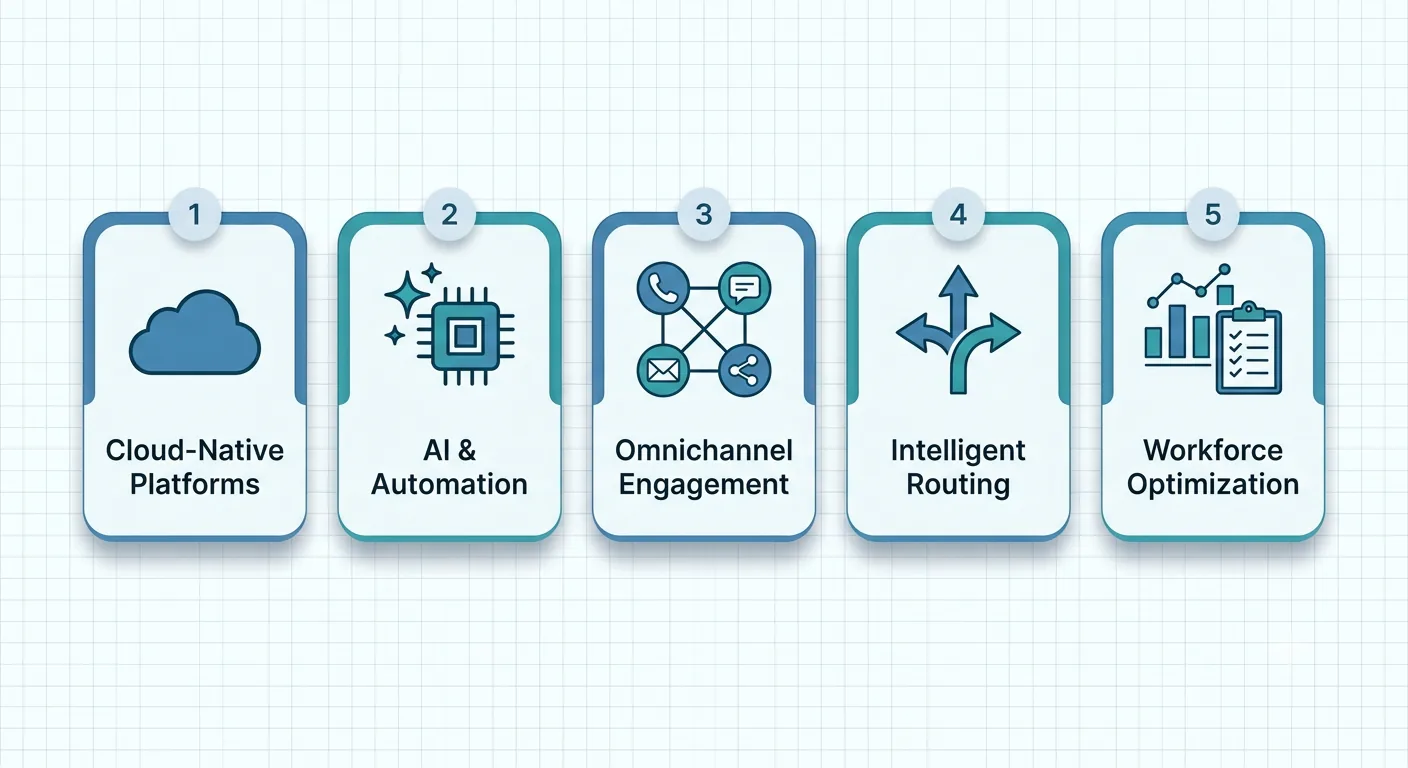
Most guides to contact center transformation cover the same five pillars: cloud platforms, AI, omnichannel, routing, and workforce optimization. Those pillars are real, and this guide covers all five. But there's a sixth piece that rarely gets mentioned, and it's the one that determines whether a modernization effort actually holds up once it's live: change control. The more a contact center modernizes, the more configuration it's managing, and the more that configuration needs to be governed, not just built.
This guide walks through why contact centers are modernizing now, what the five standard pillars actually involve, why governance is the foundation the rest depends on, and how to sequence a modernization roadmap that doesn't fall apart six months after launch.
Why Contact Centers Are Modernizing Now
A few forces are pushing this shift at the same time, which is part of why it feels urgent for so many organizations right now rather than a slow, optional upgrade.
Customer expectations have moved faster than most legacy systems can keep up with. People expect to start a conversation on chat, continue it by phone, and have the agent already know what happened, something legacy, channel-siloed infrastructure simply wasn't built to do. At the same time, cost pressure hasn't gone away: contact centers are still viewed by much of the business as a cost center, and leadership wants fewer manual processes and more automation without sacrificing service quality.
Agent attrition is another factor. Repetitive, low-value work drives burnout, and modern tooling, AI-assisted responses, better routing, real-time guidance, takes some of that load off agents so they can focus on the interactions that actually need a human. And underneath all of it, on-premise infrastructure is simply reaching the end of its practical life for many organizations: hardware refresh cycles, security patching, and the inability to integrate cleanly with modern CRM and AI tooling all push toward the cloud.
None of this means every organization modernizes for the same reason, or in the same order. But these pressures are why "contact center modernization" has become a boardroom topic rather than a purely operational one.
The Five Pillars Everyone Agrees On
Most modernization frameworks, including how Google's own AI Overview currently summarizes the topic, converge on the same five areas. They're standard for a reason: skip one, and the rest of the effort tends to underdeliver.
Cloud-Native Platforms
Moving off on-premise hardware onto a cloud-native platform is usually the foundation everything else is built on. Cloud platforms integrate more easily with CRM and ERP systems, scale up or down without a hardware refresh cycle, and remove the operational burden of maintaining physical infrastructure. This is also what makes the other four pillars possible in the first place, AI, omnichannel, and intelligent routing all depend on a platform that's API-accessible and built for integration, which most legacy on-prem systems simply aren't.
AI & Automation
AI now handles a meaningful share of routine customer interactions before a human ever gets involved, chatbots, natural language processing, and automated responses that resolve simple requests and triage everything else. Done well, this reduces wait times and frees agents to handle the interactions that actually need judgment. Done poorly, it becomes another layer of configuration that nobody fully understands six months later, which is exactly the risk this guide comes back to later.
Omnichannel Engagement
Omnichannel means a customer can move between voice, email, chat, and social media without losing context, the system remembers what happened in the last interaction, regardless of which channel it happened on. This is different from multichannel, where each channel exists but operates in isolation. Omnichannel is harder to build and much more valuable once it works, because it removes the single most common source of customer frustration: repeating yourself to a new agent on a new channel.
Intelligent Routing
Machine learning-driven routing matches customers to the best-suited available agent based on skills, history, and context, rather than a simple queue-and-wait model. Done well, this improves first-contact resolution and reduces the back-and-forth of transfers and escalations. It also tends to be one of the most frequently tuned parts of a contact center's configuration, routing rules change constantly as teams, skills, and business priorities shift, which matters for reasons this guide covers in the next section.
Workforce Optimization
Real-time analytics, automated scheduling, and sentiment analysis give supervisors visibility into how agents are actually performing and where staffing gaps exist before they become service failures. This pillar is often the most measurable one, it's where modernization efforts can point to concrete before-and-after numbers in staffing efficiency and service levels.
The Sixth Pillar: Change Control and Configuration Governance
Here's what most modernization guides don't mention: every one of the five pillars above adds configuration. New routing rules. New AI-driven flows. New integrations connecting the contact center to CRMs, ticketing systems, and third-party APIs. New omnichannel logic that has to stay in sync across every channel it touches.
Modernization doesn't reduce the amount of configuration a contact center is running, it increases it, and it increases how often that configuration changes. A legacy call center with static routing rules and no AI might go months without a meaningful configuration change. A modernized contact center running AI-driven routing, omnichannel flows, and multiple live integrations can see configuration changes weekly, sometimes daily, across a growing web of interdependent settings.
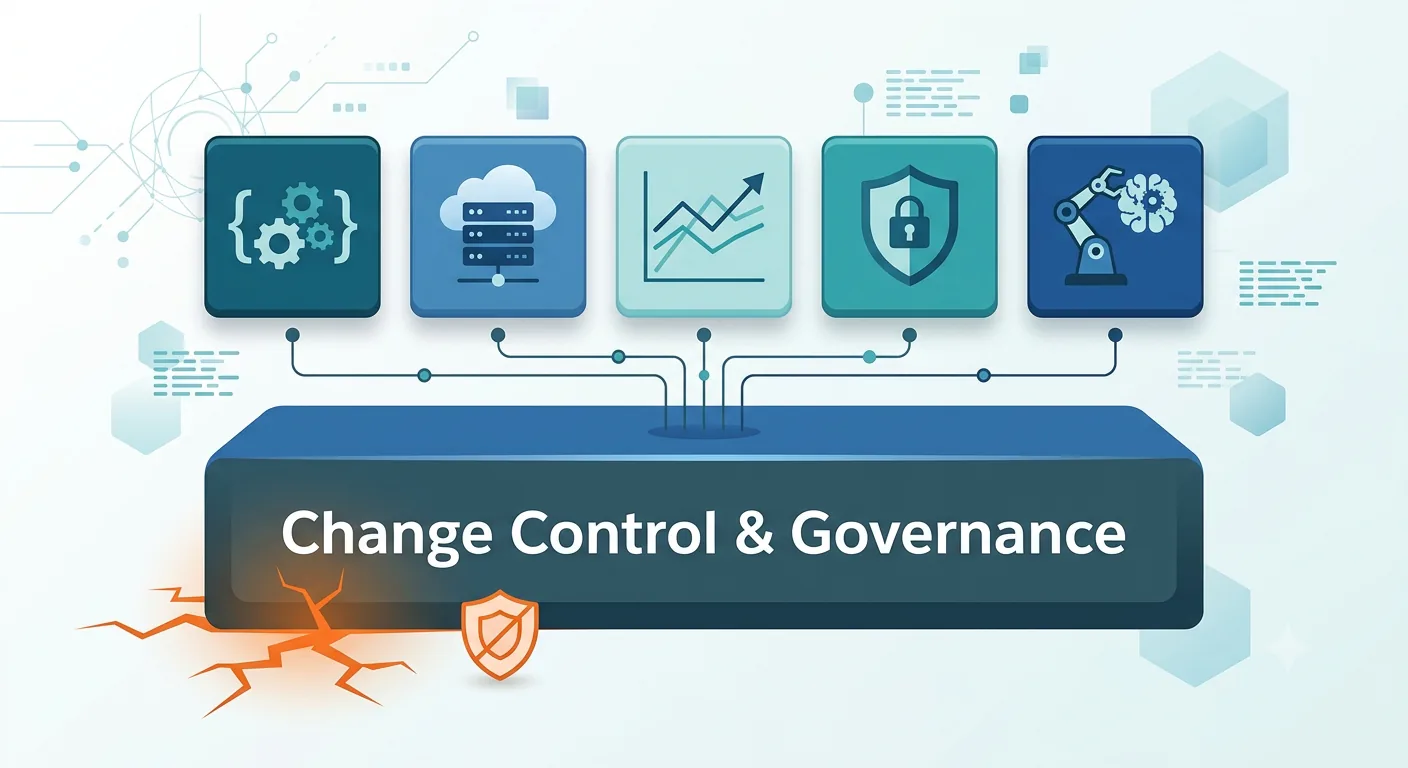
That's a problem if there's no governance layer underneath it. Without change control, modernization efforts tend to fail in a specific, predictable way: not because the technology doesn't work, but because nobody can reliably answer "what changed, and why did it break something else" once the environment gets complex enough. Configuration drifts between production and testing environments. A routing change made to support a new AI flow quietly breaks an unrelated queue. Nobody has a clear audit trail of who changed what, so troubleshooting becomes archaeology instead of a quick fix.
This is why change control belongs in the same conversation as the five pillars above, not as an afterthought bolted on once something breaks. The organizations that get the most out of modernization treat governance as infrastructure, something built in from the start, the same way they'd treat security or uptime, rather than something they reach for reactively after an outage.
For a deeper look at what this actually involves in a Genesys environment specifically, configuration as code, CI/CD pipelines, and structured auditing, see our complete guide to Genesys change control.
The Future of the Contact Center
Modernization isn't a one-time project with a finish line, the target keeps moving. A few directions are becoming clear about where contact centers are headed next.
AI is shifting from answering simple questions to handling increasingly complex, multi-step interactions with less human handoff required. That's a meaningful jump from today's chatbot-triage model, and it means the configuration and logic behind those AI flows will only get more sophisticated, and more consequential if something goes wrong.
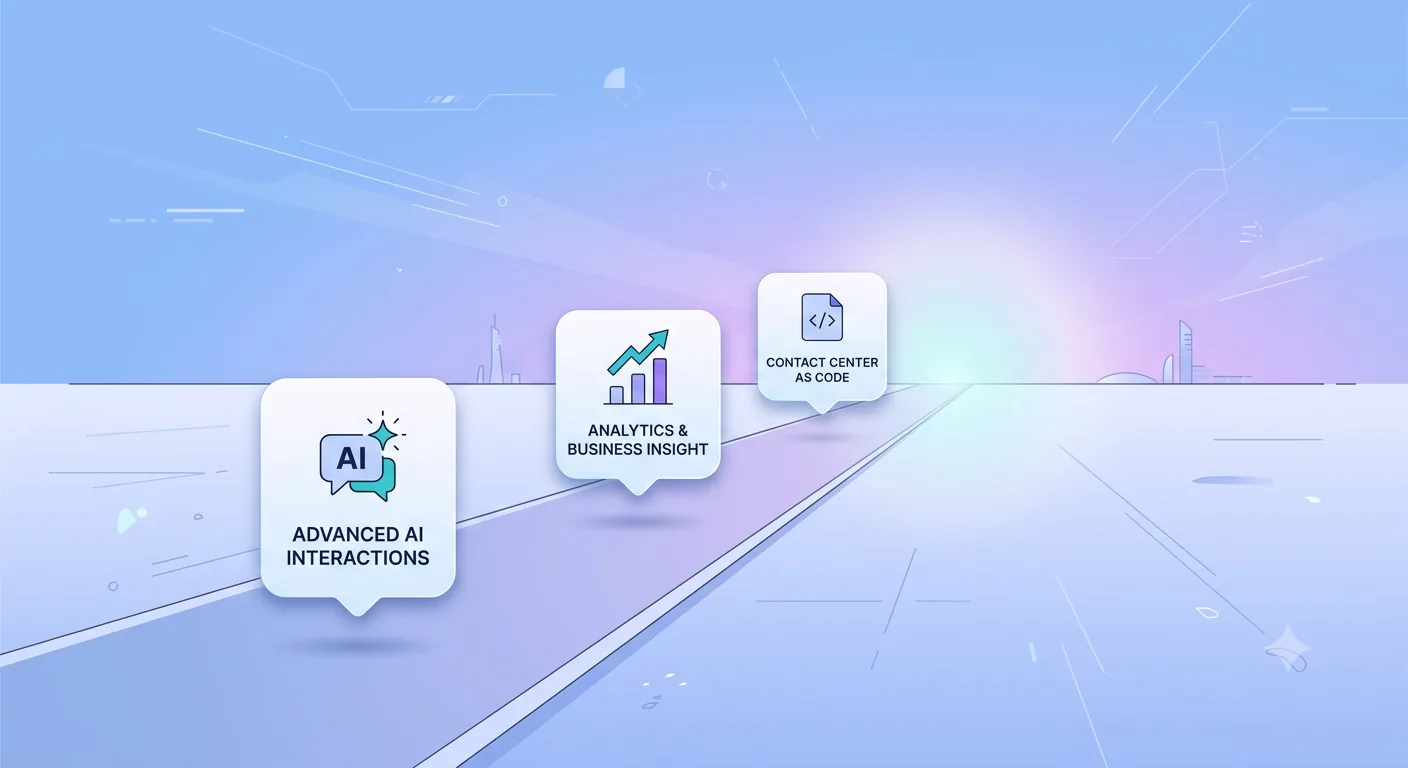
Contact centers are also increasingly being viewed as sources of business insight rather than pure cost centers. Sentiment analysis, interaction analytics, and workforce data are feeding back into broader business decisions, not just staffing ones. And the trend toward "contact center as code", treating configuration, routing logic, and integrations as version-controlled, testable artifacts rather than settings clicked through a UI, is accelerating as more organizations run into the governance problems described above.
The common thread across all of it: the contact centers that get the most value from what's coming next will be the ones that already have a solid governance foundation under what they're running today. Speed and sophistication only compound the value of good change control, they don't replace the need for it.
How to Approach a Modernization Roadmap
Modernization tends to go better when it's sequenced deliberately rather than tackled as five simultaneous, disconnected projects.
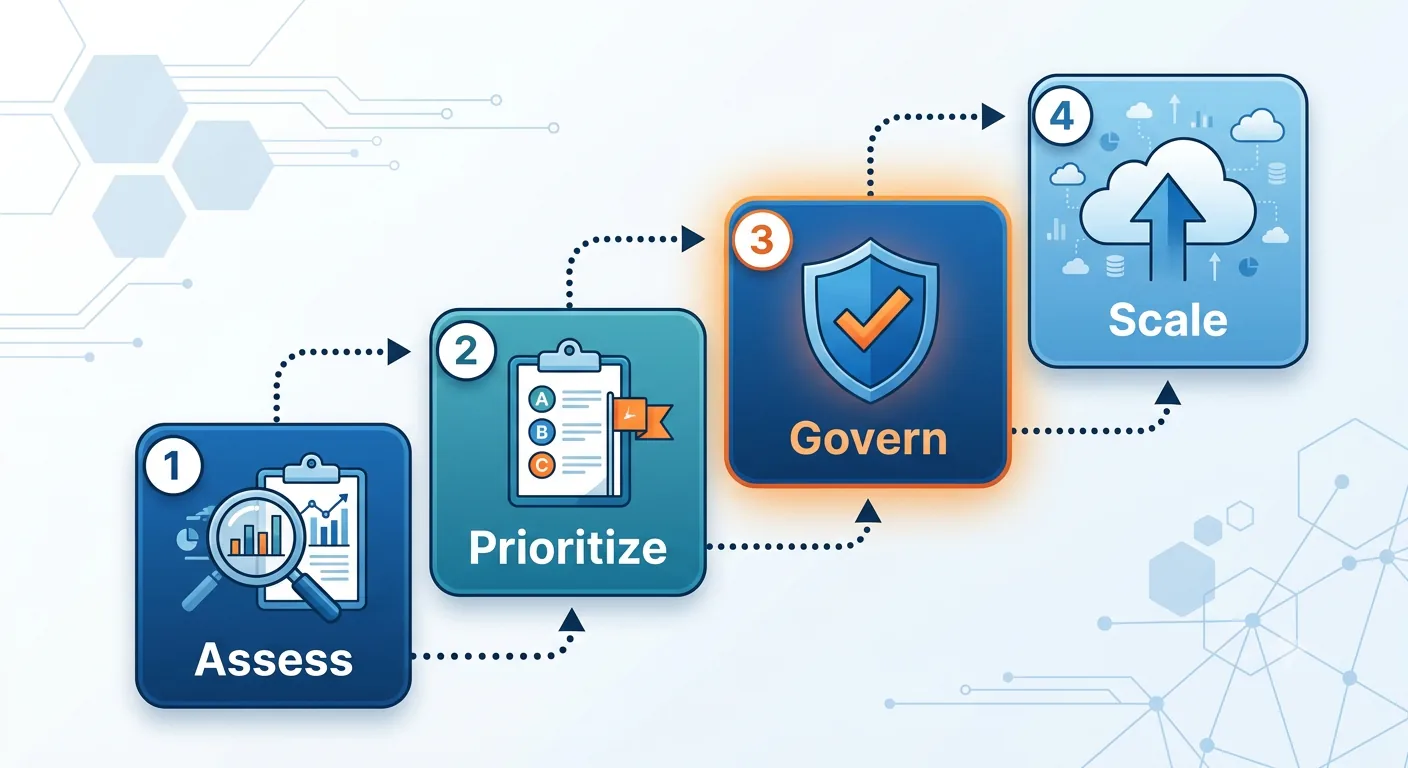
Start with an honest assessment of the current state. Before deciding what to build, understand what's actually running today, which systems, which integrations, which manual processes are propping things up that nobody's documented. This is also the point to identify where the biggest operational pain is: is it agent efficiency, customer experience, cost, or all three?
Prioritize based on where the pain is, not based on what's trendy. AI gets the most attention, but for some organizations, the highest-value first move is cloud migration or omnichannel unification, the foundation the rest depends on. There's no universal order; there's the order that fixes the biggest problem first for a given contact center.
Build governance in from day one, not after the first incident. This is the point where most guides stop and most modernization efforts start accumulating risk. Every new pillar added, a new AI flow, a new routing rule, a new integration, is a new piece of configuration that needs to be tracked, reviewed, and reversible. Treating configuration as code from the start, rather than retrofitting structure onto an already-sprawling environment, is significantly cheaper than fixing it later. Our DevOps and configuration as code approach is built specifically for this, bringing the same discipline software teams use for CI/CD to contact center configuration, so modernization can move fast without losing control of what's actually running in production.
Expect modernization to be ongoing, not a project with an end date. The five pillars will keep evolving, and the contact centers that handle that well are the ones where change is a managed, repeatable process rather than a series of one-off scrambles.
Frequently Asked Questions
What is contact center modernization? Contact center modernization is the process of transforming a legacy, on-premise call center into a cloud-based, AI-enabled operation that supports customers across multiple channels with unified context, automated routing, and real-time operational visibility.
How long does a contact center modernization initiative take? It varies significantly based on scope and starting point. A cloud migration alone can take months; a full transformation across all five pillars, cloud, AI, omnichannel, routing, and workforce optimization, is typically a multi-year, ongoing effort rather than a single project with a fixed end date.
What's the biggest risk in modernizing a contact center? Technology adoption usually isn't the hardest part, governance is. As modernization adds more configuration (AI flows, routing rules, integrations), the biggest risk is losing track of what's changed and why, leading to configuration drift, outages, and troubleshooting that takes far longer than it should.
Do I need to modernize on-premise infrastructure before adding AI or omnichannel capabilities? Not necessarily, but it's usually the practical foundation. Cloud-native platforms are what make deep AI integration and true omnichannel experiences possible at scale, most organizations find it easier to build AI and omnichannel capability on cloud infrastructure than to bolt them onto legacy on-prem systems.
Is contact center modernization the same as digital transformation? They overlap but aren't identical. Digital transformation is a broader organizational shift toward digital-first operations; contact center modernization is the specific application of that shift to customer service infrastructure, tooling, and processes.
How do I keep configuration under control as we modernize? Treat configuration the way software teams treat code: version-controlled, reviewed before deployment, and consistently applied across environments. This is what configuration as code and structured change control provide, see our guide to Genesys change control for a detailed look at how this works in practice.
Book a Demo to see how InProd helps contact centers modernize with change control built in from the start.

Jarrod Neven
Contact Center Expert, Director at InProd Solutions
Jarrod has been working in the enterprise CX space since 2001. Before starting InProd, he spent several years as a CTI Solutions Architect at Genesys itself, working across the APAC region with enterprise and government customers, which gives him a different perspective on how their platforms actually work under the hood. He's been Director at InProd Solutions since 2016, helping organizations cut through the complexity of Genesys Engage deployments.