
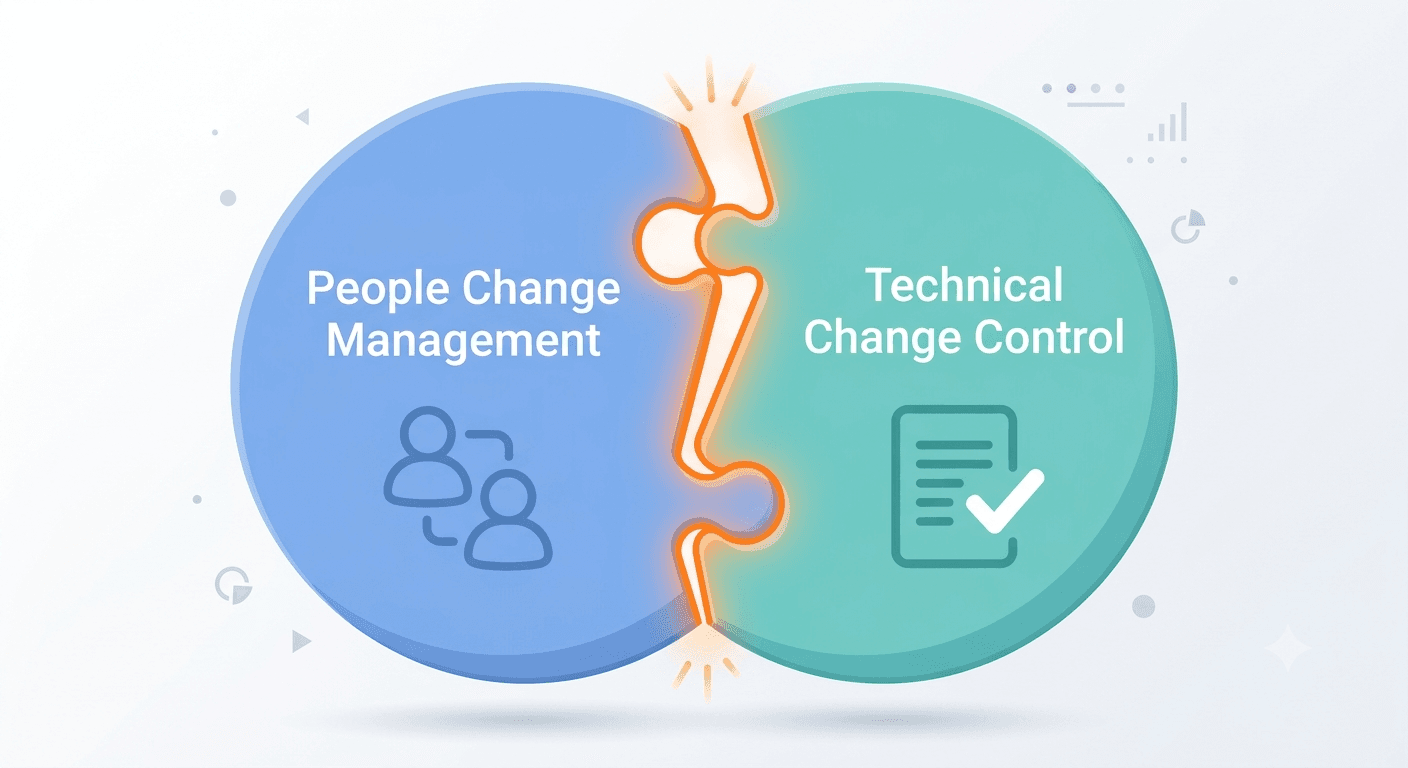
CX Change Management Misses the Technical Half
Why CX Change Management Frameworks Miss the Technical Half
Most CX change management frameworks follow some version of the same pattern: build awareness, align culture, train your people, get leadership visibly on board, roll out incrementally, reinforce the new habits so nobody slides back into old routines. It's the same shape as Prosci's ADKAR model — Awareness, Desire, Knowledge, Ability, Reinforcement — and it's a well-established discipline for good reason. Most transformation initiatives fail because people don't adopt them, not because the technology doesn't work.
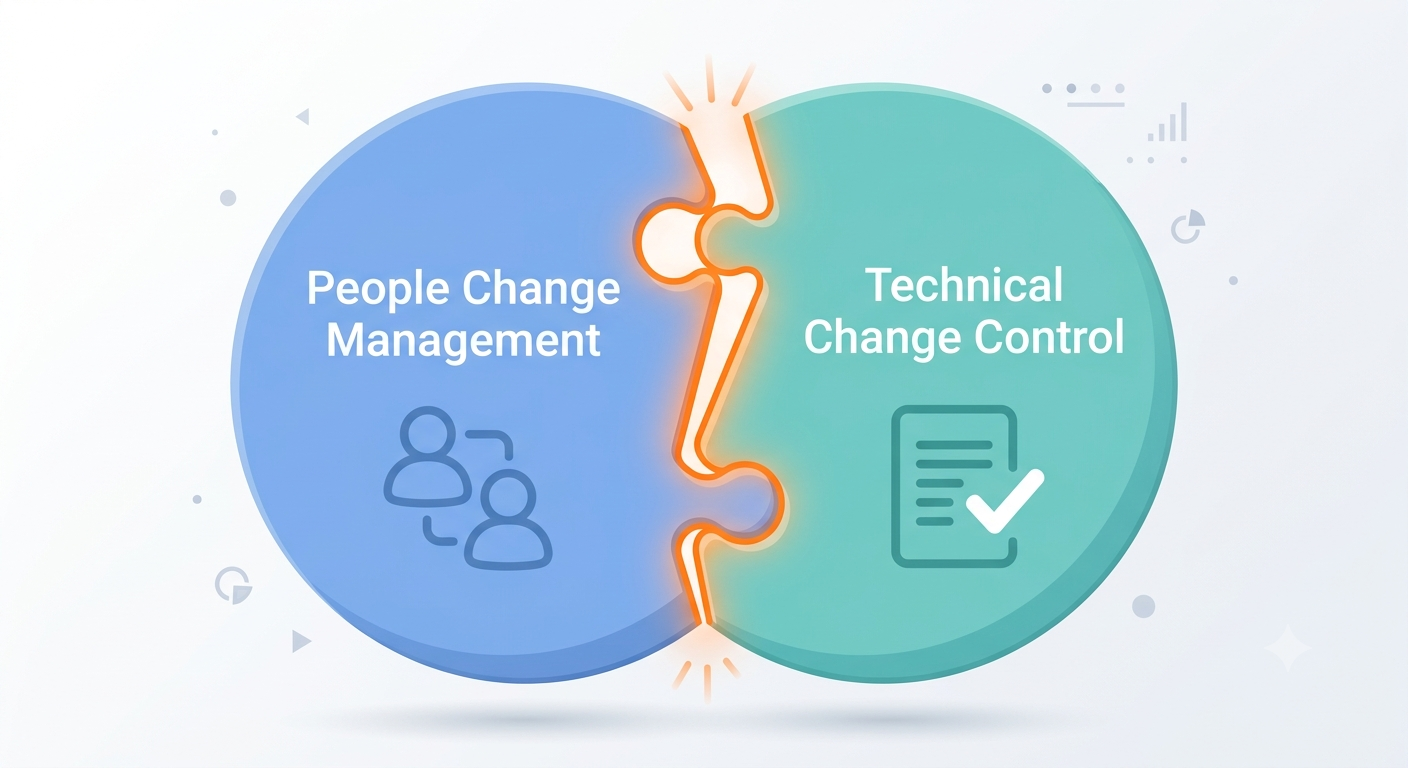
That framework is right as far as it goes. The problem is what it leaves out. Every standard CX change management model optimizes for one question: will people adopt this change? Almost none of them ask a second, equally important question: is the system underneath the change actually stable? A CX transformation can hit every people-side milestone — trained agents, engaged leadership, steady CSAT in week one — and still come apart a few weeks later, for reasons that have nothing to do with adoption and everything to do with what happened to the configuration behind the scenes.
What the Standard Model Covers Well
It's worth being clear about what existing CX change management guidance gets right, because it gets a lot right. The core building blocks — culture alignment, employee enablement, feedback and metrics, visible leadership — map to a real and well-tested implementation pattern: assess readiness, design the training and communication plan, roll out incrementally while building momentum from early wins, then sustain and reinforce so the new behavior sticks.
This is genuinely good guidance for the human side of a CX initiative. Agents need to understand why a change is happening, not just be told to use a new tool. Leadership needs to model the new behavior, not just mandate it from a memo. None of that is in question here. The gap isn't in what this framework does — it's in what it assumes is out of scope.
The Blind Spot: What Happens After the Training Is Done
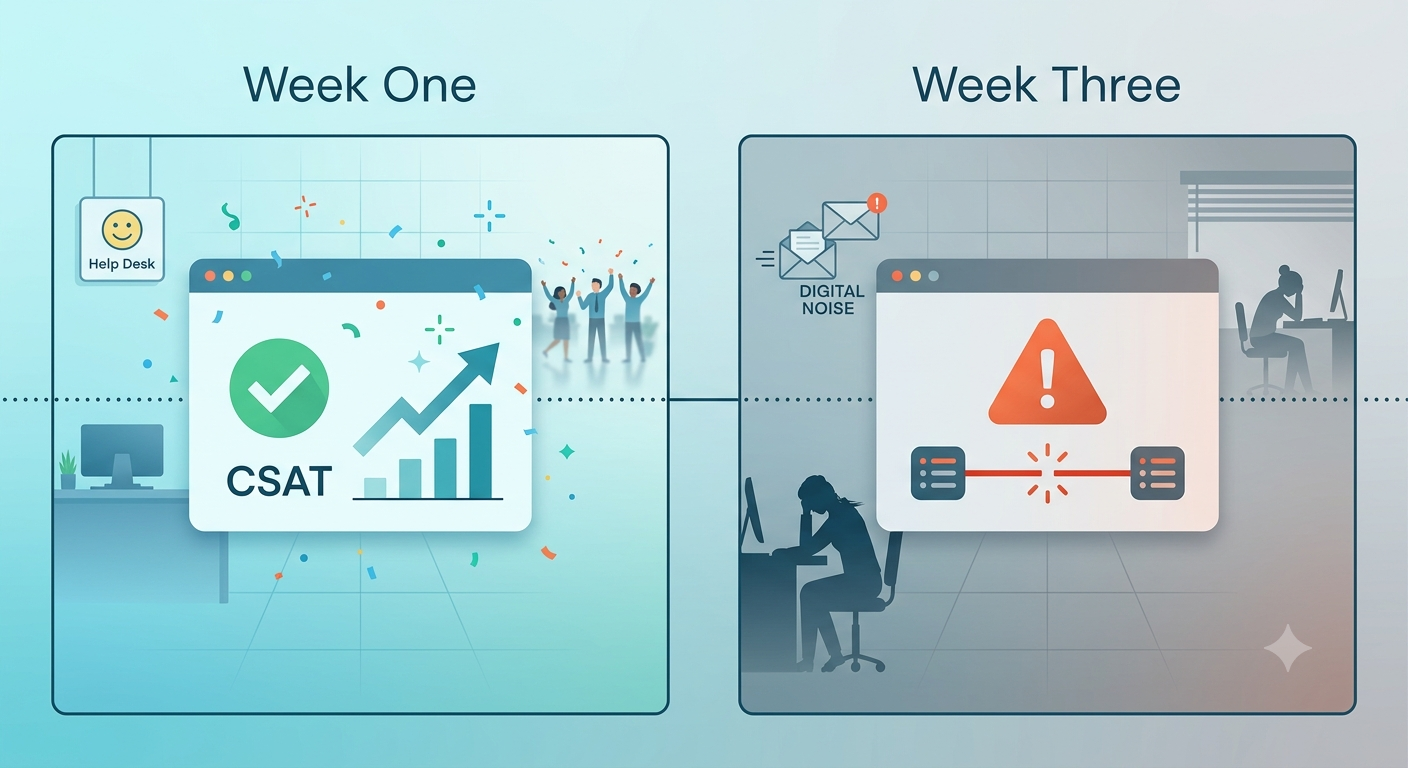
Picture a fairly typical CX initiative: a contact center rolls out new AI-assisted routing to improve first-contact resolution. The change management plan executes well. Agents are trained. Supervisors are briefed. Leadership sends the right communications at the right time. CSAT holds steady through week one, and the rollout gets marked a success.
Three weeks later, a routing rule tweaked to support the new AI flow quietly conflicts with a queue configuration nobody remembered touching. Calls start misrouting in a completely unrelated part of the business. Nobody can immediately say what changed, because nothing about that change was written down, reviewed, or tracked — the "change" that was managed was the training and communication plan, not the configuration itself.
This is the distinction that matters: people change management governs adoption. Technical change control governs the system people are adopting. They're two different disciplines, solving two different failure modes. A change management framework can succeed completely and still leave an organization exposed, because it was never designed to answer "who changed this configuration, when, and can we safely revert it" — that's the job of configuration auditing, not a training rollout. That's not a criticism of the framework, it's just outside what it was built to do.
Why This Gap Matters More as CX Initiatives Get More Technical
This blind spot has always existed, but it's getting more expensive. CX initiatives used to mean process and training changes layered on top of relatively static systems. Increasingly, they mean AI-driven flows, deeper integrations, and routing logic that changes frequently, which means there's simply more configuration in motion, changing more often, with more ways for one change to quietly break something unrelated.
The more technical a CX transformation gets, the more this second discipline matters, and the more a change management plan that only covers people and process leaves real risk unaddressed.
What Closing the Gap Actually Looks Like
Closing this gap doesn't mean replacing the people-side change management plan, it means pairing it with a technical one. That means treating configuration changes with the same discipline as the training rollout: written down before they're applied, reviewed by a second person, deployed consistently across environments, and fully reversible if something goes wrong — the same standard ISO 27001 sets for change management controls generally. In practice, this looks like configuration as code, structured change control, and a real audit trail — the same rigor software engineering teams apply to code, applied to contact center configuration instead.
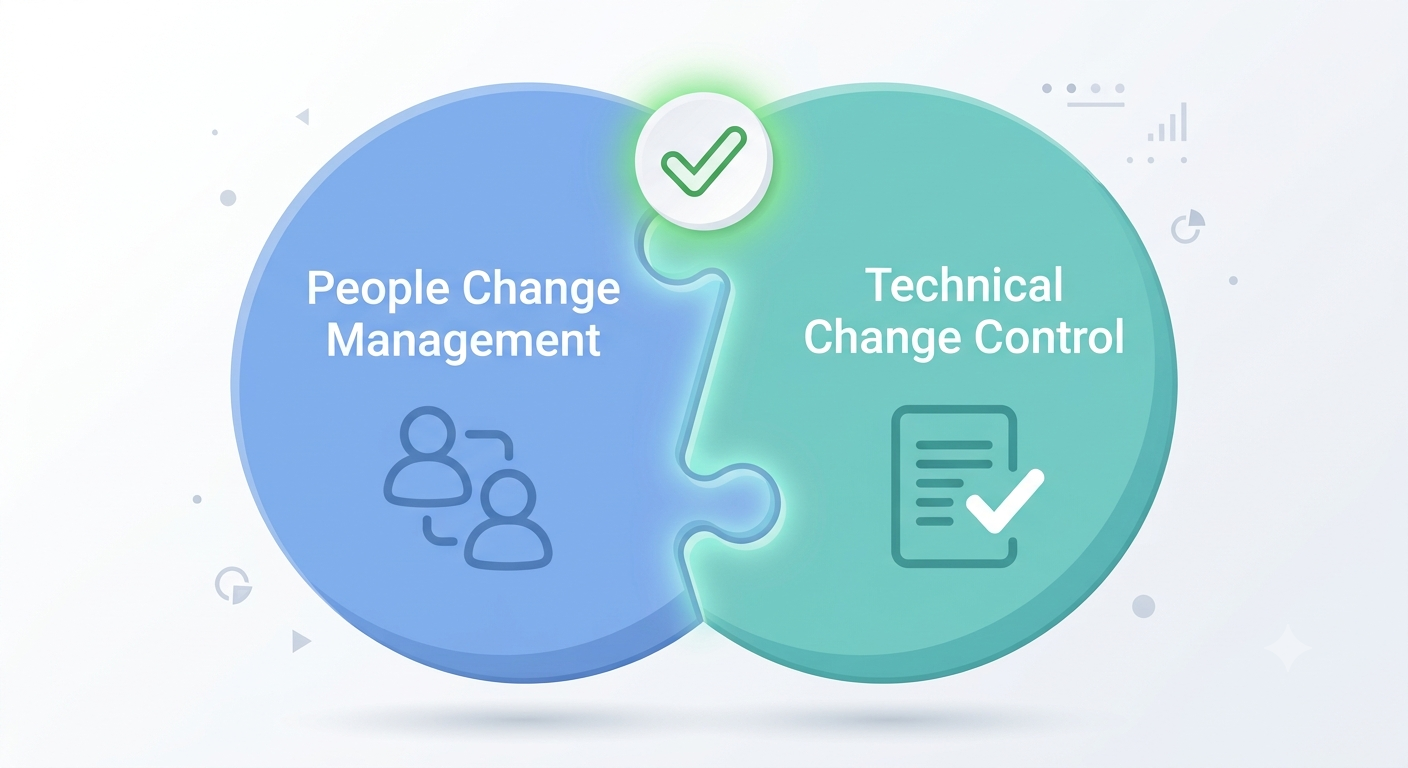
This is the layer InProd is built for. If the people-side plan answers "how do we get our team to adopt this successfully," structured technical governance answers "how do we make sure what we're asking them to adopt stays stable once it's live."
The Missing Second Half
None of this is an argument against the CX change management frameworks already out there — they're solving a real problem, and solving it well. It's an argument for treating them as half the picture. The organizations that get CX transformation right aren't the ones with the best training plan or the best technical governance, they're the ones that built both, at the same time, instead of discovering the second one was missing after something broke.
See how InProd can help your contact center with change management.

Jarrod Neven
Contact Center Expert, Director at InProd Solutions
Jarrod has been working in the enterprise CX space since 2001. Before starting InProd, he spent several years as a CTI Solutions Architect at Genesys itself, working across the APAC region with enterprise and government customers — which gives him a different perspective on how their platforms actually work under the hood. He's been Director at InProd Solutions since 2016, helping organizations cut through the complexity of Genesys Engage deployments.