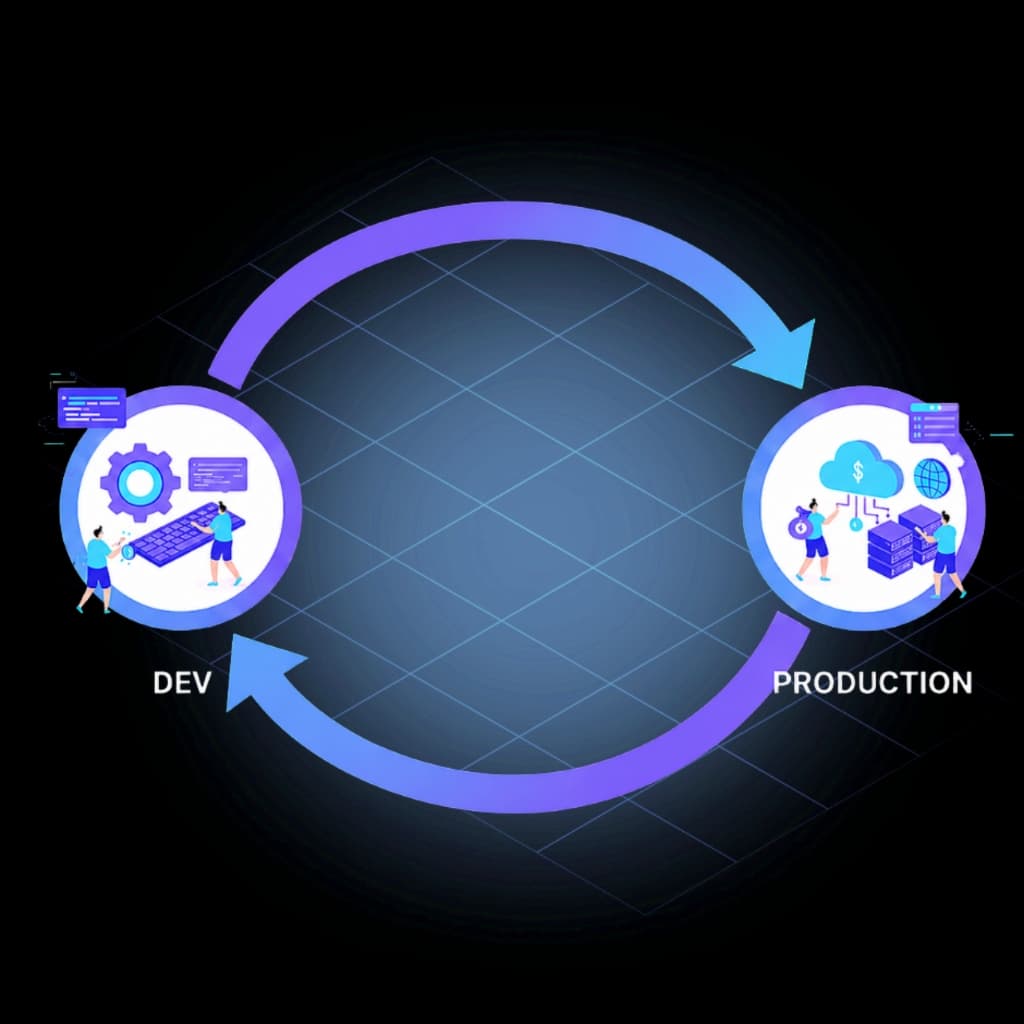
Genesys Cloud CI/CD with Jenkins.
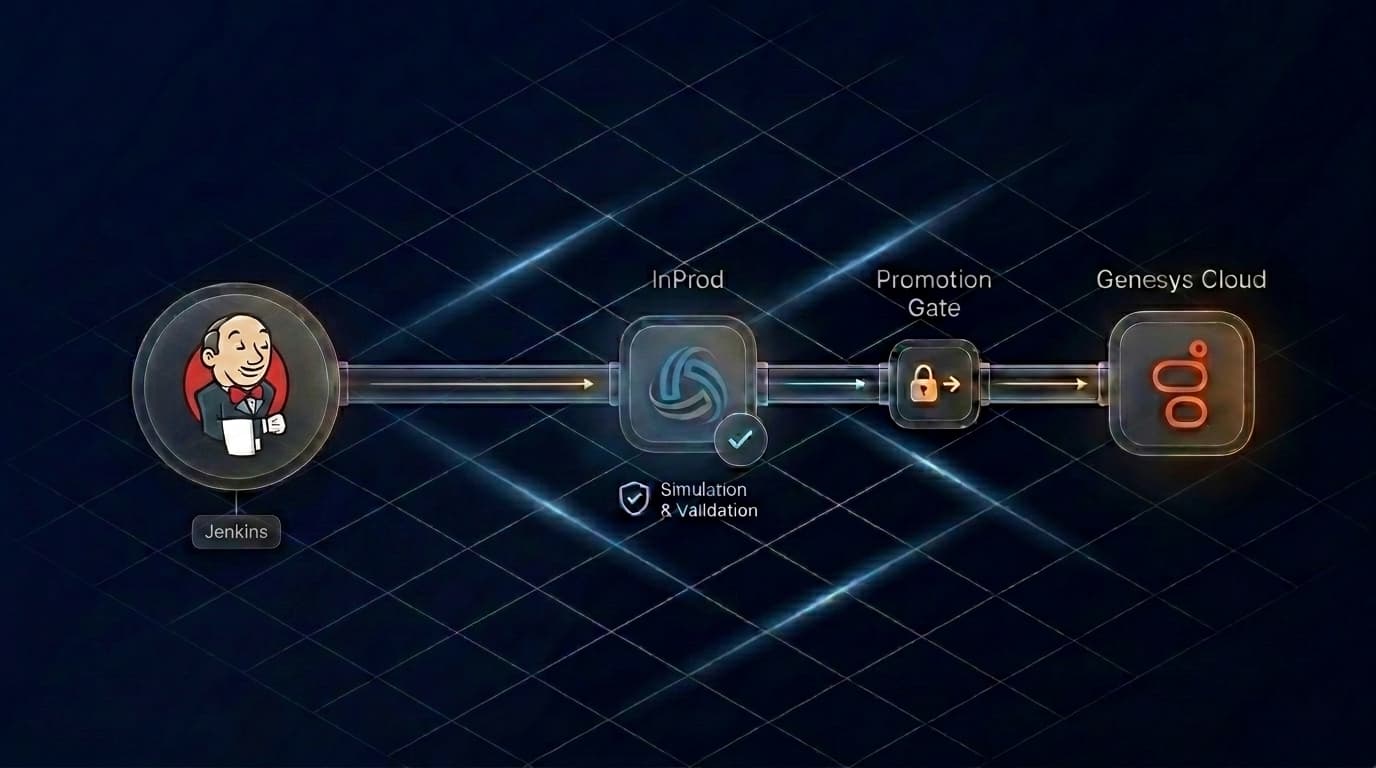
Trigger InProd changeset validation and deployment from Jenkins — with input step approval gates, credentials binding, Simulate Run before every environment, and deployment evidence archived as build artifacts at every stage of your Genesys Cloud Jenkins pipeline.








Step-by-step implementation guide
How to build a Genesys Cloud CI/CD pipeline with Jenkins and InProd — including the full Declarative Pipeline, input-gated promotion, and rollback strategy.
How It Works
Three steps from a reviewed change to a recorded production deployment.
Define changes as an InProd changeset
Package your Genesys Cloud configuration changes — routing flows, queue definitions, skill mappings, data actions — into governed deployment units managed in InProd and triggered from your Jenkins Jenkinsfile.
Validate before every deployment
Automatically run a validate-only stage at the start of every pipeline run. InProd executes Simulate Run against the target environment and reports exactly what would change — before any configuration is modified.
Promote through Dev, UAT, and Production with input gates
Use Jenkins' input step to require explicit sign-off between environments. InProd handles environment-aware variable mapping and deployment execution; Jenkins enforces who can approve each promotion.
What You Get
Automated validation on every build
Every Genesys Cloud configuration change is verified against the live target environment before any deployment stage runs — not after it reaches production.
Input-gated environment promotion
Jenkins' input step pauses the pipeline and requires an authorized user to confirm before UAT or Production deployment begins. No stage runs without explicit approval.
Simulate Run before each environment
InProd executes a pre-deployment simulation showing exactly what will be created, updated, or deleted — including environment-specific differences invisible to a standard diff.
Archived artifacts for deployment evidence
inprod-result.json and inprod-results.env are archived after every run using archiveArtifacts, providing an immutable deployment record stored in Jenkins.
Rollback from pipeline or InProd UI
Revert to a previous state using InProd's point-in-time restore — without manual reconstruction of what the configuration was before the change.
Works With Your Existing Jenkins Setup
No custom plugins required beyond Node.js availability. InProd runs via npx @inprod.io/run-changesets in any Jenkins stage using either the NodeJS Plugin or a Docker agent with a Node.js image. Your existing credentials store, branch filters, and pipeline structure all apply — InProd adds Genesys Cloud-specific validation and deployment governance on top of the Jenkinsfile you already run.
This makes it straightforward to add CX as Code deployments to a Jenkins workflow your team already understands.
New to the InProd pipeline model? See how the five-stage Genesys Cloud CI/CD pipeline works →
Jenkins vs GitHub Actions vs Azure DevOps
InProd runs the same governed Genesys Cloud deployment workflow on every platform. The right choice depends on where your team already works.
Jenkins
You are hereBest fit for teams with existing self-hosted Jenkins infrastructure who need fine-grained agent control. No new plugins required — InProd runs via npx in any stage, with input-gated approvals and deployment artifacts archived per build.
- Self-hosted — full control over agents and execution environment
- Input-gated approvals between each stage
- Works with NodeJS Plugin or Docker agents

GitHub Actions
Best fit when repositories are on GitHub and the team wants a cloud-hosted runner with no infrastructure to maintain. PR-native validation, protected environment approval gates, and the InProd action on the GitHub Marketplace.
- Cloud-hosted — no agents or servers to manage
- PR-triggered validation native to GitHub
- Marketplace action — no custom configuration required

Azure DevOps
Best fit for enterprise teams standardized on the Microsoft/Azure ecosystem. Multi-stage pipelines with environment approval checks, Azure AD integration, and variable groups — InProd adds the Genesys Cloud deployment layer via a published step template.
- Enterprise Microsoft/Azure ecosystem integration
- Multi-stage pipelines with environment approval checks
- Secret variable groups for credential management
Frequently Asked Questions
Why use Jenkins for Genesys Cloud deployments instead of manual promotion?
Manual promotion relies on engineers replicating the same steps correctly across Dev, UAT, and Production every time. A Jenkins Declarative Pipeline enforces the same process on every build — validation runs first, input gates require explicit approval before production, and every deployment archives a result artifact. The pipeline removes the process variability that causes most configuration-related incidents.
How do Jenkins input gates work with InProd?
Jenkins' input step pauses the pipeline and waits for an authorized user to confirm from the Jenkins UI or via API. Only after approval does the downstream deployment stage execute. InProd then runs Simulate Run and deploys the changeset within that approved stage — so every promotion to UAT or Production is explicit and auditable.
Does InProd work with Docker agents in Jenkins?
Yes. If Node.js is not pre-installed on your Jenkins agents, use a Docker agent with agent { docker { image 'node:18-alpine' } } instead of the NodeJS Plugin. The npx @inprod.io/run-changesets command runs identically in either execution context.
Does this work with CX as Code and Terraform?
Yes. InProd sits alongside your CX as Code and Genesys Cloud Terraform workflows. Terraform manages desired-state definitions; InProd governs the deployment lifecycle — Simulate Run, promotion gates, drift detection, and the audit trail. Jenkins can trigger both Terraform applies and InProd changeset deployments within the same pipeline stages.
Need the full pipeline picture? Genesys Cloud CI/CD Pipeline →
Your Genesys Cloud Jenkins Pipeline, Governed.
Every configuration change validated automatically, promoted through input-gated approvals, and archived as a build artifact — before the next incident forces the issue.
Book a Consultation