
Genesys Automation: Managing Scaling Across Environments

Genesys automation
Genesys automation becomes increasingly complex when organizations must manage configuration deployments across environments with vastly different scaling requirements. Production systems often feature full High Availability (HA) configurations spanning multiple sites, while development environments operate with minimal infrastructure. This disparity creates significant obstacles for teams attempting to maintain consistent Genesys automation practices across their entire deployment pipeline.
The ability to perform Genesys automation effectively depends on addressing these scaling differences between production and non-production environments. Organizations need solutions that can traverse architectural variations without requiring manual intervention or environment-specific modification of deployment packages.
This article explores how to address horizontal and vertical scaling of Genesys components using InProd Changesets, examining the technical concepts that enable single-changeset deployments across inconsistent environments while maintaining robust DevOps processes.
Understanding Scaling Differences That Impact Genesys Automation
Genesys environments rarely mirror each other perfectly. The architectural differences between development, testing, and production systems create fundamental challenges for Genesys automation strategies. Understanding these differences provides the foundation for implementing effective solutions.
Horizontal Scaling Variations Across Environments
Horizontal scaling refers to the number of instances of each component deployed within an environment. Production environments typically require multiple instances of critical components to handle load and provide redundancy. Development environments, conversely, often run single instances to conserve resources and simplify troubleshooting.
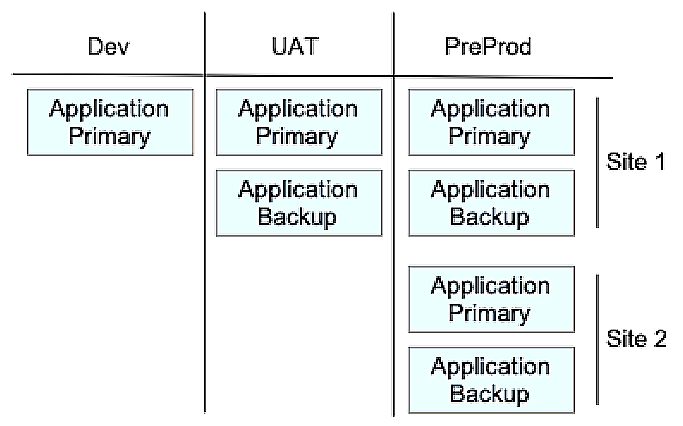
Consider a typical enterprise deployment pattern. The development environment might contain a single instance of each application server, sufficient for developers to test functionality. The User Acceptance Testing (UAT) environment adds redundancy with primary and backup instances. Production environments expand further, potentially spanning multiple geographic sites with full HA configurations at each location.
These horizontal scaling differences mean that a deployment targeting production must create and configure significantly more objects than the same deployment targeting development. Without proper Genesys automation tooling, teams must either maintain separate deployment packages for each environment or perform extensive manual modifications during promotion.
Vertical Scaling and Configuration Complexity
Vertical scaling involves the configuration parameters assigned to each instance. Memory allocations, connection pool sizes, timeout values, and other parameters often differ substantially between environments. A development instance might operate with minimal resources, while production instances require significantly higher allocations.
Beyond resource parameters, vertical scaling encompasses the relationships between components. A production application server might connect to multiple database servers configured for failover, while development connects to a single database instance. These relationship differences compound the complexity of cross-environment deployments.
The Genesys documentation provides guidance on recommended configurations for various deployment sizes, but translating these recommendations into automated deployments requires tooling that can adapt to each environment’s specific requirements.
High Availability Architecture Differences
High Availability configurations introduce another layer of complexity for Genesys automation efforts. HA components such as backup servers, warm standby instances, and geographic redundancy exist in production but rarely appear in lower environments.
Most Genesys lab environments do not include HA components, as they add complexity without providing value during initial development. Higher testing environments such as UAT typically include the full HA suite to verify failover behavior before production deployment. Pre-production and production environments often span multiple sites with complete HA at each location.
This progression creates environments with fundamentally different architectures. A changeset that works in development might fail in UAT because it lacks awareness of backup components. Similarly, a changeset validated in UAT might require modification for production’s multi-site topology.
Why Traditional Genesys Automation Approaches Fall Short
Before examining modern solutions, understanding traditional approaches illuminates why organizations struggle with scaling differences and why new Genesys automation approaches have become necessary.
Environment-Specific Deployment Packages
Many organizations maintain separate deployment packages for each environment. Development receives one package, UAT receives another, and production receives a third. Each package contains the specific configurations appropriate for its target environment.
This approach works but introduces significant maintenance burden. Every change must be replicated across multiple packages. Discrepancies between packages can cause unexpected behavior when changes promote through environments. Teams spend considerable time ensuring packages remain synchronized rather than building new functionality.
The risk of configuration drift increases substantially with environment-specific packages. A developer might update the development package without corresponding updates to UAT and production packages. These discrepancies often remain hidden until deployment failures occur in higher environments.
Manual Modification During Promotion
Some organizations use a single base package but manually modify it during promotion to each environment. A deployment engineer might add backup application configurations when promoting to UAT, then add multi-site configurations when promoting to production.
Manual modification introduces human error into the deployment process. Even experienced engineers occasionally miss configuration items or introduce typos. These errors often manifest as subtle behavioral differences that prove difficult to diagnose.
Manual processes also create bottlenecks. Deployments must wait for qualified engineers with environment-specific knowledge. This constraint slows release velocity and creates single points of failure within the organization.
Scripted Transformations
More sophisticated organizations implement scripted transformations that modify deployment packages based on target environment parameters. These scripts might read environment-specific configuration files and adjust deployment packages accordingly.
Scripted transformations reduce manual effort but require significant development and maintenance investment. The scripts themselves become critical infrastructure that must be tested, documented, and maintained. Changes to Genesys configurations often require corresponding changes to transformation scripts.
Script complexity grows as environments diverge. Simple parameter substitutions give way to conditional logic handling various edge cases. Over time, these scripts become difficult to understand and modify, creating technical debt that impedes agility.
How InProd Changesets Transform Genesys Automation
InProd promotes the concept of deploying Genesys configuration changes via single Changesets that can traverse multiple inconsistent Genesys environments. This approach eliminates the need for environment-specific packages or manual modifications while maintaining deployment consistency.
The Changeset Concept for Consistent Genesys Automation
A Changeset represents a logical unit of change that can be applied to any target environment. Rather than encoding environment-specific configurations directly, Changesets define the intent of the change and allow the deployment system to adapt that intent to each environment’s specific requirements.
When promoting a change between environments, numerous factors require consideration for successful deployment. Scaling differences should top the list of considerations. Changesets address these differences through intelligent adaptation rather than manual intervention.
The Changeset can cater for environmental differences and detect issues before any changes deploy. Pre-deployment validation identifies potential problems such as missing dependencies or incompatible configurations. This validation prevents failed deployments that could disrupt operations.
Iterator Functionality for Horizontal Scaling in Genesys Automation
The iterator represents a fundamental concept for handling horizontal scaling differences in Genesys automation. Each action within a Changeset can be configured to iterate, or repeat, a different number of times for each targeted environment.
Consider a deployment that includes both primary and backup application servers. In the development environment, only the primary server exists, so the backup application action should not execute. The iterator value of zero causes the action to be skipped entirely for development.
For UAT environments with standard HA configurations, the iterator value might be one, creating a single backup instance. Production environments spanning multiple sites might use an iterator value of two or more, creating backup instances for each site.
The iterator allows users to determine how many instances of an object should exist for any given environment. While application objects provide a clear example, any Genesys configuration object can leverage iterator functionality. Queues, routing strategies, data actions, and other objects all benefit from iterator-based scaling.
This approach eliminates the need for environment-specific deployment packages. A single Changeset contains all necessary configurations, with iterator values controlling instantiation counts per environment. Changes to the base configuration automatically apply to all environments during subsequent deployments.
Evaluator Functionality for Vertical Scaling in Genesys Automation
The evaluator concept focuses on modifying configuration parameters for each iteration of an action. Where iterators control how many instances exist, evaluators control how each instance differs from others.
Consider the primary application deployment. Each instance of the application needs a unique name to distinguish it within the environment. The evaluator can append site identifiers or instance numbers to base names, ensuring uniqueness without manual intervention.
For production environments, backup applications also require differentiation. Each backup must associate with its corresponding primary instance. Evaluators can establish these relationships dynamically based on iteration context.
Parameters requiring evaluation extend beyond names and relationships. Connection strings might reference different database instances per site. Resource allocations might vary based on expected load at each location. Timeout values might differ based on network latency between sites.
The evaluator system supports various transformation patterns:
Sequential numbering appends incrementing values to base parameters, useful for creating unique identifiers across instances.
Site-based substitution replaces placeholder values with site-specific configurations, enabling geographic customization.
Conditional logic applies different values based on environment characteristics, supporting complex deployment scenarios.
Reference resolution establishes relationships between objects created in the same or previous iterations, maintaining proper dependencies.
Combined Iterator and Evaluator Patterns for Advanced Genesys Automation
The true power of InProd’s approach emerges when iterators and evaluators work together. Complex deployment scenarios that previously required extensive manual effort become straightforward automated processes.
A multi-site production deployment might proceed as follows. The Changeset defines a primary application server with an iterator value of two for production, creating instances for each site. The evaluator modifies each instance’s name to include site identification and adjusts connection parameters for local resources.
The backup application server action also uses an iterator value of two for production. Its evaluator establishes relationships with the corresponding primary instances created in the previous action. Resource allocations adjust based on site-specific requirements defined in environment configuration.
Supporting infrastructure such as queues and routing strategies follow similar patterns. Iterators ensure appropriate instance counts while evaluators customize each instance for its specific context.
This combined approach enables single Changesets to deploy and maintain CX features within multiple Genesys environments regardless of architectural differences. Development, UAT, and production all receive appropriate configurations from the same source definition.
Implementing Effective Genesys Automation with Scaling Awareness
Successful implementation of scaling-aware Genesys automation requires thoughtful planning and systematic execution. The following sections provide guidance for organizations adopting this approach.
Environment Configuration Management for Genesys Automation
Effective scaling automation depends on accurate environment configuration data. Each environment requires a configuration profile defining its scaling characteristics, including instance counts, site topology, and resource allocations.
Environment configurations should live in version-controlled repositories alongside Changeset definitions. This co-location ensures configurations evolve together and provides audit trails for changes. Proper contact center planning includes maintaining accurate environment documentation.
Configuration profiles should capture:
Topology information describing sites, zones, and redundancy requirements for each environment.
Scaling parameters specifying instance counts for various component types.
Resource allocations defining memory, connections, and other capacity-related values.
Relationship mappings establishing how components connect within each environment’s architecture.
Regular validation ensures configuration profiles remain accurate as environments evolve. Automated checks can compare profile definitions against actual deployed configurations, flagging discrepancies for investigation.
Changeset Design Principles for Genesys Automation
Designing Changesets for scaling-aware deployment requires different thinking than traditional environment-specific approaches. Several principles guide effective Changeset design.
Define intent, not implementation. Changesets should express what the deployment accomplishes rather than exactly how it accomplishes the goal in each environment. Iterator and evaluator configurations translate intent into environment-appropriate implementations.
Maximize reuse through parameterization. Configuration values that vary between environments or instances should be parameterized rather than hardcoded. This parameterization enables evaluators to substitute appropriate values during deployment.
Establish clear dependency chains. Actions within Changesets should explicitly declare dependencies on other actions. These declarations ensure proper ordering and enable evaluators to reference objects created by previous actions.
Include validation steps. Pre-deployment validation actions can verify environment readiness and configuration consistency before making changes. Post-deployment validation confirms successful application of changes.
Testing Strategies for Genesys Automation Across Environments
Testing scaling-aware deployments requires strategies that account for environmental variations. Traditional approaches that test only in development may miss issues that manifest only in scaled environments.
Synthetic environment testing creates temporary environments with production-like scaling characteristics. Changesets deploy to these synthetic environments before promoting to actual UAT or production systems. This approach catches scaling-related issues early without risking production stability.
Incremental promotion with validation deploys Changesets to progressively larger environments with validation gates between each promotion. Failures at any gate halt promotion until issues resolve.
Parallel deployment comparison applies Changesets to multiple environments simultaneously and compares results. Unexpected differences trigger investigation before changes reach production.
Automating changes in Genesys Cloud DevOps requires comprehensive testing strategies that validate behavior across all target environments.
Monitoring and Observability for Genesys Automation Deployments
Effective monitoring provides visibility into deployment execution and post-deployment behavior across all environments. This observability enables rapid identification and resolution of issues.
Deployment dashboards display real-time status of Changeset applications across environments. Teams can monitor iterator execution, evaluator transformations, and validation results as deployments progress.
Comparative metrics highlight behavioral differences between environments after deployment. Unexpected variations might indicate configuration issues requiring investigation.
Automated alerting notifies teams when deployments fail or when post-deployment behavior deviates from expectations. Early notification enables rapid response before issues impact customers.
Benefits of Scaling-Aware Genesys Automation
Organizations implementing scaling-aware Genesys automation through InProd Changesets realize significant benefits across multiple dimensions.
Reduced Maintenance Burden Through Genesys Automation
Maintaining single Changesets rather than environment-specific packages dramatically reduces maintenance effort. Changes made once automatically apply appropriately to all environments during subsequent deployments.
This reduction frees teams to focus on building new capabilities rather than maintaining deployment infrastructure. The time previously spent synchronizing environment-specific packages becomes available for value-adding activities.
Improved Consistency Across Genesys Environments
Single-source Changesets ensure consistent intent across all environments. While implementations differ based on scaling requirements, the logical configuration remains identical. This consistency improves testing reliability and reduces production surprises.
Configuration drift becomes nearly impossible when all environments deploy from the same Changeset definitions. Differences between environments exist only where explicitly defined through iterator and evaluator configurations.
Faster Deployment Velocity with Genesys Automation
Eliminating manual modification steps accelerates deployment velocity. Changes can promote through environments as quickly as validation completes rather than waiting for manual intervention.
Faster velocity enables more frequent releases, which in turn enables smaller changes per release. Smaller changes carry lower risk and prove easier to troubleshoot when issues arise.
Enhanced Auditability for Genesys Automation Processes
Changeset-based deployments provide comprehensive audit trails. Every deployment records exactly what changed, when, and who initiated the change. Iterator and evaluator configurations document how changes adapted to each environment.
These audit trails support compliance requirements and enable effective incident investigation. When problems occur, teams can quickly identify relevant changes and understand how they manifested in affected environments.
Conclusion
Scaling differences between Genesys environments have traditionally created significant challenges for automation efforts. Production systems with full HA configurations spanning multiple sites differ fundamentally from minimal development environments. These differences forced organizations to choose between maintaining multiple deployment packages, performing manual modifications, or building complex transformation scripts.
InProd Changesets provide an elegant solution through iterator and evaluator functionality. Iterators control instance counts per environment, enabling single Changesets to create appropriate numbers of objects regardless of target architecture. Evaluators customize each instance’s parameters, ensuring proper naming, relationships, and resource allocations.
With the introduction of these concepts, InProd Changesets now cater to extreme edge case situations such as the scaling differences discussed throughout this article. A single Changeset can deploy and maintain CX features within multiple Genesys environments regardless of their architectural differences.
Organizations seeking to implement robust DevOps processes for their Genesys environments should consider how scaling-aware Genesys automation can transform their deployment practices. The investment in proper tooling and process design pays dividends through reduced maintenance burden, improved consistency, faster velocity, and enhanced auditability.
The path forward for Genesys automation lies in embracing tools and techniques that acknowledge and accommodate environmental differences rather than fighting against them. Iterator and evaluator patterns represent a significant step forward in this journey, enabling truly consistent automation across inconsistent environments.
